On this page
South African summers bring busy party weekends, but they also bring gusty afternoons, coastal wind and sudden thunderstorms. Jumping castle wind safety is the single most important habit for anyone who owns an inflatable, whether you run a hire business, a school, a church or a family venue. This guide covers how to read the weather, how to anchor properly, when to stop play, and what to look for when you buy a castle that will be used outdoors all season.
Why wind matters so much for inflatables
A jumping castle is a large, light structure full of air with a big surface area facing the wind. A blower keeps it inflated, but it is the anchoring that keeps it on the ground. When a gust catches the walls or roof, the force can lift or shift the unit, especially if anchors are missing, loose or set into soft, wet soil. Children inside add weight but also move unpredictably, so a castle that seems stable when empty can behave differently in use.
Summer is also storm season over much of the country. The South African Weather Service regularly issues warnings for severe thunderstorms with damaging winds and hail over the interior from spring into summer, and coastal areas such as Durban, Gqeberha and Cape Town have their own strong-wind days. Checking those warnings should be part of every booking.
Jumping castle wind safety before the event
Check the forecast and warnings
- Look at the forecast the day before and again on the morning of the event, including expected gusts, not just average wind speed.
- Check for SAWS warnings for thunderstorms, damaging winds or hail in your area.
- Highveld storms often build in the afternoon; plan set-up and play times with that in mind.
- For hire businesses, include a weather clause in your booking terms so clients know you may delay or cancel for safety.
Choose the right spot
- Set up on flat, firm ground, away from overhead power lines, trees with loose branches, fences, walls and swimming pools.
- Where possible, use a building or hedge as a windbreak, while still keeping a safe gap around the unit.
- Leave a clear border around the castle so nothing hard is close by if it moves.
- Place the blower where it cannot be knocked over and where its intake will not suck in leaves or plastic.
Anchoring your jumping castle properly
Every commercial inflatable has anchor points. Use all of them, every time – not just the corners. The method depends on the surface:
- Grass and soil: drive ground stakes fully into the ground at an angle leaning away from the unit, so the ropes pull against the stake. Soft or waterlogged soil holds less, so add extra stakes or move to firmer ground.
- Paving, concrete or indoor floors: stakes cannot be used, so use heavy ballast such as sandbags or water weights on every anchor point, as advised for your unit.
- Ropes and straps: check them for fraying before each event and keep them tight; replace damaged ones rather than knotting them.
- After inflation: walk around the castle and re-tension anything that has slackened as the unit filled.
Always follow the anchoring instructions and user limits supplied with your specific product. If you are unsure, ask your supplier before the first event.
When to stop play and deflate
Have a clear rule that the supervising adult can apply without debate. Stop use, get children out calmly and deflate when:
- Wind gusts start to make the walls or roof sway or lift noticeably.
- Thunder is heard or lightning is seen – get everyone indoors.
- Heavy rain or hail begins, as wet surfaces become slippery and soil softens around stakes.
- An anchor pulls loose or the blower stops (for example, during a power cut).
Deflating takes only a few minutes once the blower is switched off. Keep everyone clear while it goes down and do not let children play on a deflating unit.
Power cuts and blowers
If the power goes off, the castle begins to deflate. Have a plan: a supervisor who clears the unit immediately, and if you work at venues with unreliable power, a generator suitable for the blower load. Ask your consultant for the blower rating of the unit you buy so you can size backup power correctly.
After wind or rain: drying, checks and storage
- Never pack a wet castle for long. Re-inflate it on a dry day and let it dry fully to avoid mould and odours.
- Inspect seams, anchor points and netting after any windy event for strain or tears.
- Check stakes and ropes, and replace bent or worn items.
- Store rolled units in a dry, ventilated place, off the floor and away from rodents.
Our warranty terms are set per product, and following the care and anchoring instructions is part of looking after your investment.
Choosing a jumping castle for windy areas
If you often work at the coast, on open fields or on exposed school grounds, size and shape matter. A smaller footprint and lower profile catch less wind and are quicker to deflate if the weather turns. Compare these units from our jumping castles range (current Rand prices on the site):
- Jumping Castle (3x5m) – R13,290, 5 m × 3 m. Compact and quick to set up and pack down.
- Commercial Castle 4m – R14,190, 4 m × 4 m. A square footprint that suits smaller gardens and venues.
- Castle with Slide – R16,890, 6 m × 4 m. Adds a slide, so plan a slightly larger clear area.
- Combo Inflatable (7x5m) – R19,990, 7 m × 5 m. More play value for bigger parties, with more surface to anchor well.
Larger units can absolutely be used safely; they simply need more care with anchoring, more ballast on hard surfaces and earlier decisions to stop when the wind picks up.
Jumping castle wind safety checklist
- Forecast and SAWS warnings checked the day before and the morning of the event.
- Flat, firm site clear of power lines, trees, walls and pools.
- All anchor points used, stakes angled away from the unit or ballast on hard floors.
- Ropes and straps inspected and tight after inflation.
- A named adult supervisor with authority to stop play.
- Plan for power cuts and lightning.
- Unit dried fully and inspected before storage.
Buy with confidence from a Durban-based supplier
Inflatables Direct SA sells new, commercial-grade jumping castles with Rand prices online and nationwide delivery priced by weight and shown at checkout. No payment is taken at checkout: a consultant confirms your order and total first, and you pay by EFT. Formal quotations and invoices are available on request, and our returns policy is published on the site. Questions about jumping castle wind safety or which unit suits your site? Call or WhatsApp +27 63 016 8542 or email support@moducoreafrica.co.za.
Shop the units in this guide
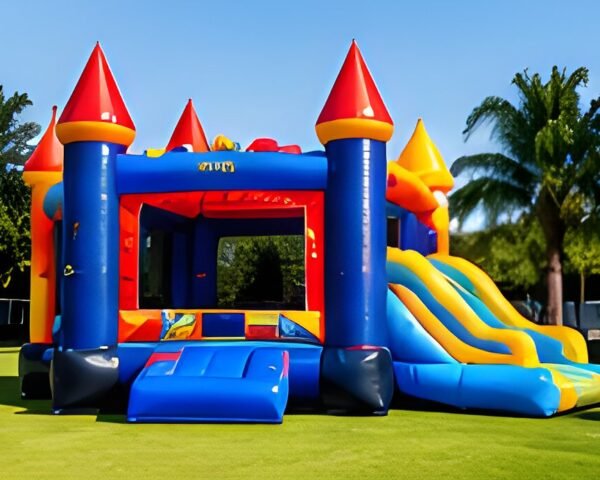 Commercial Castle 4mR14,190
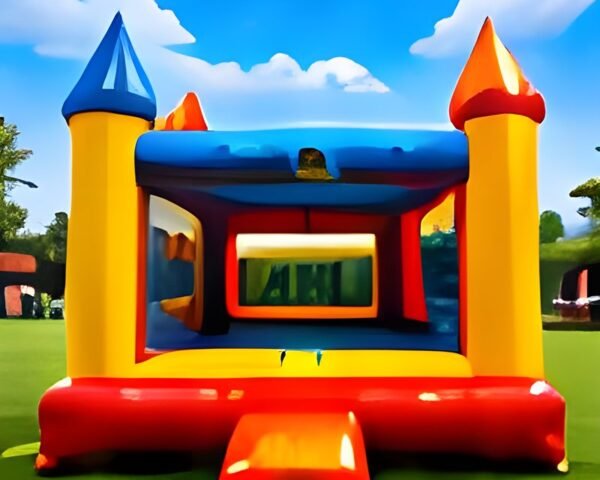 Jumping Castle (3x5m)R13,290
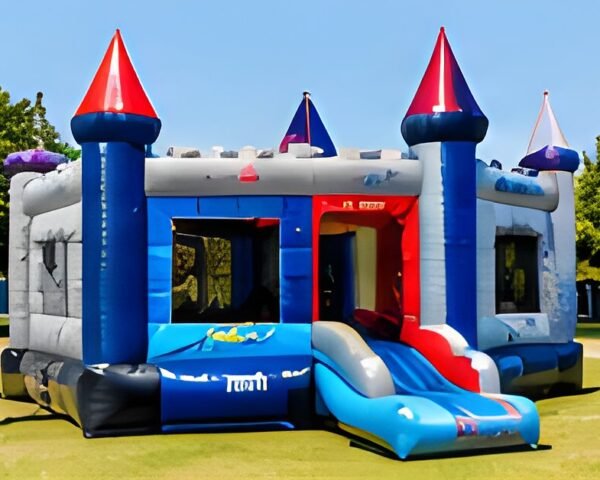 Castle with SlideR16,890
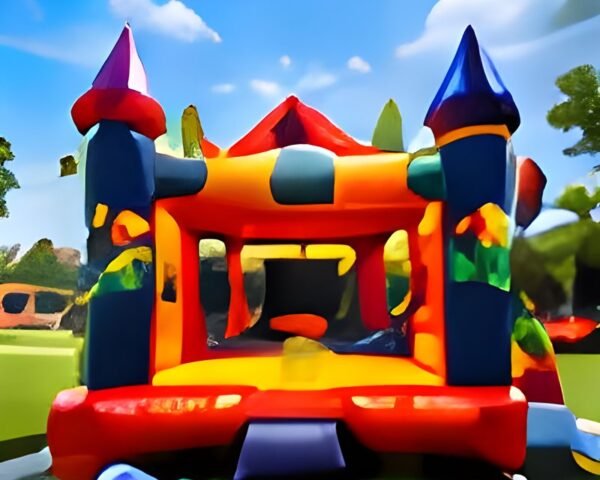 Combo Inflatable (7x5m)R19,990
Frequently asked questions
When should I stop using a jumping castle because of wind?
Stop play and deflate when gusts make the walls or roof sway or lift, when thunder or lightning starts, or if an anchor pulls loose. Follow your unit instructions.
How do I anchor a jumping castle on paving or concrete?
Ground stakes cannot be used on hard surfaces, so place heavy ballast such as sandbags or water weights on every anchor point.
What happens to a jumping castle during a power cut?
The blower stops and the castle starts to deflate, so clear children off immediately. A generator suited to the blower load is a good backup.
Ready to buy? Browse all commercial inflatables, see delivery prices by province, or request a formal quote. A sales consultant confirms every order before you pay.