On this page
Running inflatables in hot weather is part of every South African summer, but this season needs extra planning. In September 2026 the South African Weather Service (SAWS) warned that a strong El Niño is developing, with above-normal temperatures very likely from October to December and a similar outlook into January 2027. Early November has already brought heat warnings, including forecasts of 36 to 40°C for the interior of the Western Cape. If you own or are about to buy a jumping castle, slide or water slide, here is how to keep kids safe, keep your equipment in good shape and keep bookings running through the heat.
What the 2026/27 summer outlook means for inflatable owners
According to the government news service SAnews, SAWS expects El Niño to bring warmer and drier conditions to many parts of the country, with below-normal rainfall most likely over much of South Africa and heatwaves likely to become more frequent. The forecast strength is still uncertain, but the practical message is clear: plan for more very hot event days than usual this December.
For hire businesses, schools, churches and venues that means three things:
- Midday sessions on dry inflatables will be less comfortable, so timing and shade matter more.
- Demand for water slides and splash play is likely to rise on hot weekends.
- Drier conditions may bring local water restrictions, so check your municipality’s rules before running water equipment.
Inflatables in hot weather: the core safety rules
1. Check the forecast and warnings every event day
Make the SAWS website part of your routine. Heat days often end with thunderstorms on the Highveld and in KwaZulu-Natal, so look for both heat and storm warnings. Agree with your client in advance what happens if a warning is issued: shorter sessions, a later start, or a postponement.
2. Test the surface with your hand
PVC in direct sun can become hot to the touch, especially darker colours and slide surfaces. Before opening the unit, and every so often during the day, press your palm flat on the bed, walls and slide lane. If it is uncomfortable for your hand, it is uncomfortable for a child’s bare legs. Pause, cool the area or move play to a shaded unit.
3. Use shade and smart timing
- Where possible, set up where trees or buildings give afternoon shade, while keeping well clear of branches, fences and walls.
- Shade gazebos or shade cloth over the waiting area help children who are queuing.
- Schedule the busiest sessions for the morning and late afternoon, and plan a break during the hottest part of the day.
4. Hydration and rest breaks
SAWS forecasters have warned that extreme heat can cause hyperthermia, and active children overheat quickly. Keep drinking water at the exit, run short sessions with rest in the shade, and remind parents about hats and sunscreen. Never allow food or drinks inside the inflatable.
5. Supervise more closely
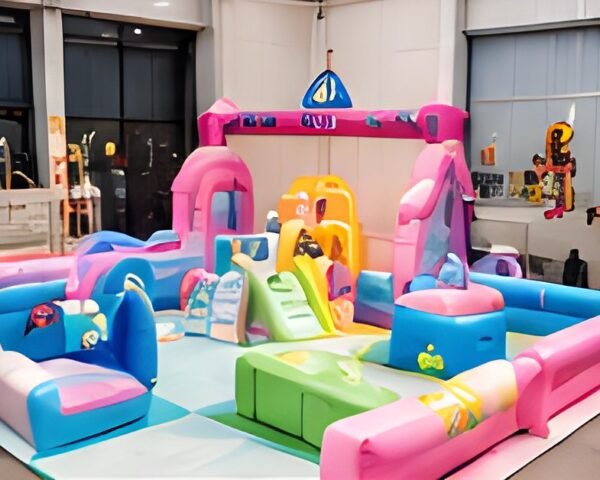
Tired, overheated kids are more likely to push, fall or collide. Keep a dedicated supervisor at the entrance, limit numbers by size and age, and separate toddlers from older children. A Toddler Soft Play Inflatable (R16,490, 6 m × 4 m) gives little ones their own space.
Look after your blower in the heat
Your blower runs continuously, so it needs to breathe:
- Keep the air intake clear of grass, leaves, plastic bags and clothing.
- Place it on a flat, dry surface and, where you can, out of direct sun.
- Use a suitable outdoor extension lead, fully unrolled, and keep plugs and connections off wet ground, especially near water slides.
- Never cover the blower to protect it from the sun or rain in a way that blocks airflow.
- If power fails, clear children off the unit immediately as it deflates.
Water slides: the hot-day favourite (with rules)
On a very hot day, a water slide is often the unit everyone wants. If you are considering adding one before December, these are some of the options on our water slides category page, with Gauteng, central and Cape delivery as calculated at checkout:
- Slip n Slide (10 m) – R11,490; delivery R750 / R920 / R1,110.
- Slip n Slide with Splash Pool (10 m) – R11,990; delivery R750 / R930 / R1,120.
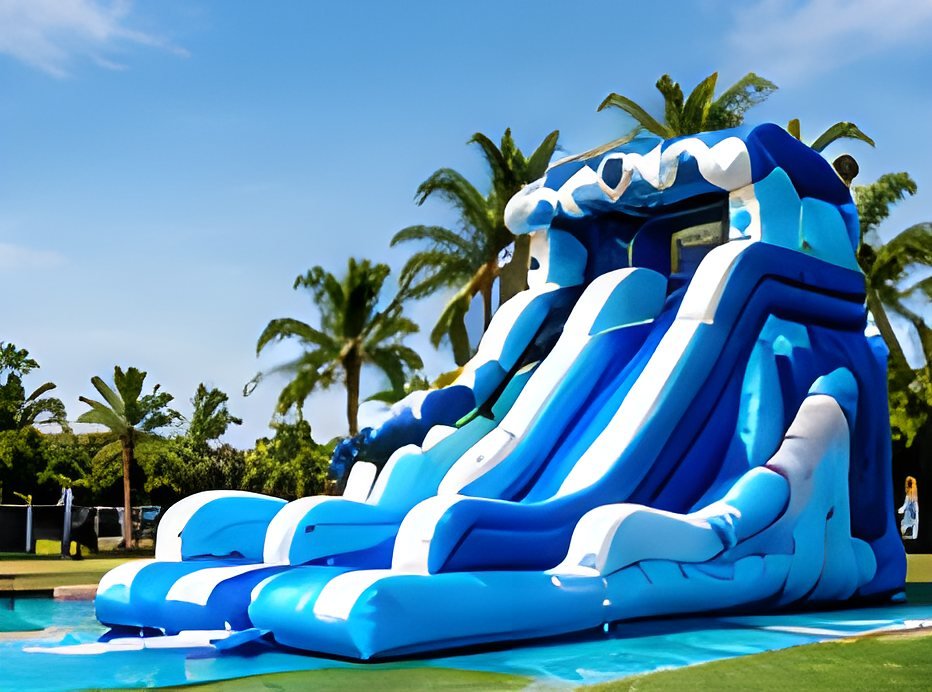
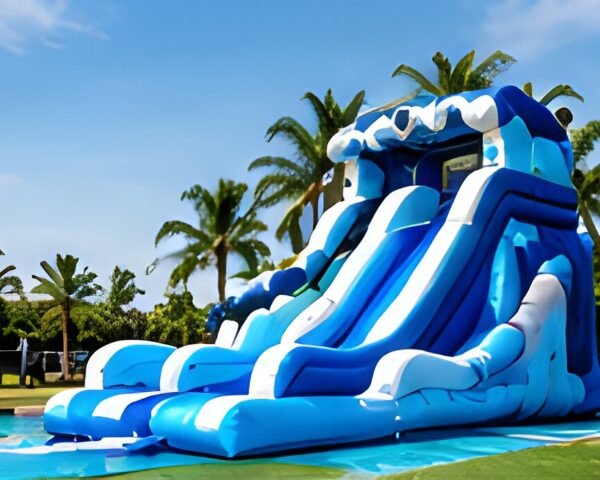
- Tropical Water Slide – R17,690, 8 m × 5 m; delivery R870 / R1,080 / R1,330.
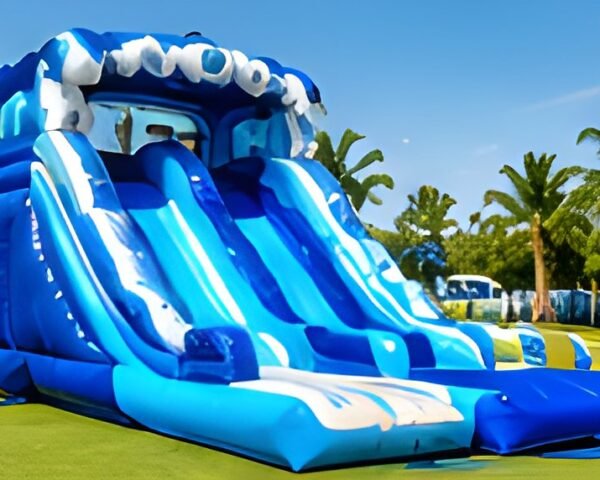
- Wave Water Slide – R25,790, 10 m × 6 m; delivery R960 / R1,180 / R1,480.
Water slide safety rules for hot days:
- Check your local municipality’s water restriction notices before every booking, and agree with the client where water comes from.
- Set up on grass on a gentle, even area with a safe run-off zone at the end.
- Keep the blower and all electrical connections well away from water and puddles.
- One child per lane at a time, feet first, and no climbing on the walls.
- Remember that wet children still get sunburnt, so sunscreen and shade breaks apply.
Packing up and storage after a hot day
Heat and moisture together are hard on inflatables. After a water event, let the unit dry fully before rolling it for storage, ideally on the same day in the sun once it is clear of children. Store it in a cool, dry, dark place off the floor and away from rodents. For a full routine, see our guide on how to clean a jumping castle, and our wind safety guide for storm days.
Hot-weather checklist for event day
- Checked SAWS heat and storm warnings for the area.
- Chosen a shaded, level site clear of branches, fences and sharp objects.
- All anchor points secured.
- Blower intake clear, blower on a dry surface, leads off wet ground.
- Hand-tested the surface temperature before opening.
- Water, shade and sunscreen available at the exit.
- Session times planned around the hottest hours.
- Supervisor at the entrance with age and number limits.
- Water restrictions checked if running a water slide.
- Plan to dry the unit fully before storage.
Getting the right equipment before December
Handling inflatables in hot weather well is mostly about planning: the right unit for the site, shade, water and a routine your team follows every time. If you are adding a water slide or a toddler unit for summer, Inflatables Direct SA is a Durban-based supplier of new, commercial-grade equipment with Rand prices online and nationwide delivery priced by weight at checkout. No payment is taken at checkout: a consultant confirms your order first, and formal quotations are available on request. Read our returns policy and warranty terms, or call or WhatsApp +27 63 016 8542.
Shop the units in this guide
 Tropical Water SlideR17,690
 Slip n Slide with Splash Pool (10 m)R11,990
 Wave Water SlideR25,790
 Toddler Soft Play InflatableR16,490
Frequently asked questions
Can a jumping castle get too hot in the sun?
Yes. PVC in direct sun can become hot to the touch. Test the surface with your palm before and during use, and pause or move play to shade if it feels uncomfortable.
Is it safe to run a blower in very hot weather?
Keep the air intake clear, place the blower on a flat, dry surface out of direct sun where possible, never block its airflow and keep electrical connections off wet ground.
Are water slides allowed during water restrictions?
It depends on your municipality. Check your local water restriction notices before each booking and agree with the client where the water will come from.
Ready to buy? Browse all commercial inflatables, see delivery prices by province, or request a formal quote. A sales consultant confirms every order before you pay.